
Polyaspartic Floor Coatings in Indianapolis IN - a fast-curing floor on a sound slab
If your garage floor is stained, dusty or peeling, we prep the slab right and put down a coating you can use again quickly.
- Licensed and fully insured.
- Free estimates at your property.
- Replies within 1 business day.
Is a polyaspartic coating right for your garage floor?
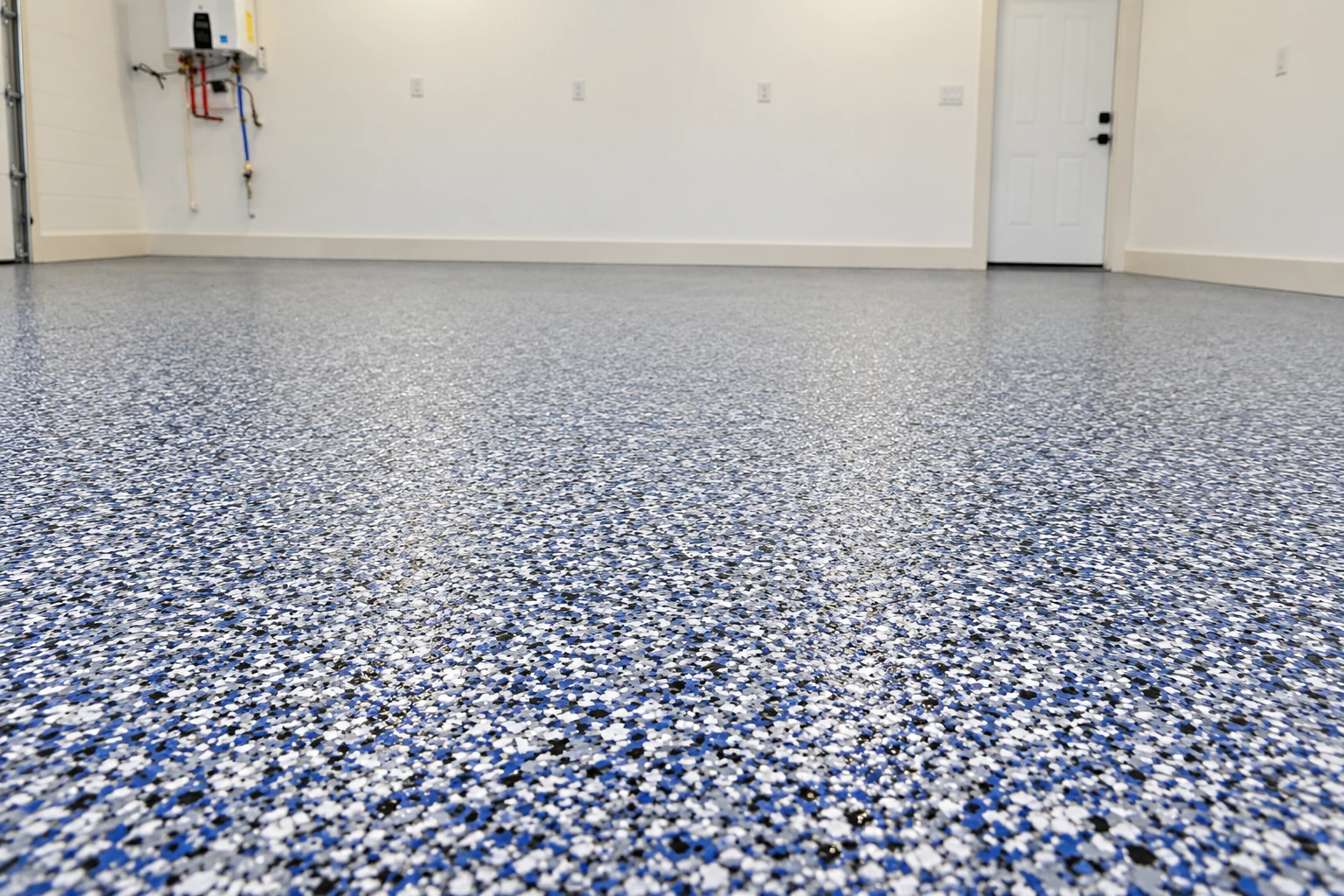
Polyaspartic floor coatings in Indianapolis are a fast-curing, sun-stable finish we put down over a ground and repaired slab, so you get a tough garage floor that holds its color and a garage you can use again much sooner than with epoxy.
Most people who call about polyaspartic have a garage floor that's stained, dusty or peeling from an old coating, and they don't want to lose the garage for a week. What moves the price is the size of the floor, how much grinding and repair the slab needs, whether there's an old coating to take off, and the finish you pick. The schedule turns on how old the slab is and on the weather, because this coating has a temperature range it can go down in. When I come out, I write up exactly what your floor needs so you aren't guessing, and if you're weighing it against a standard garage floor coating, we'll talk that through on site.
How do you know your garage floor needs a coating?
Oil stains that won't lift
Bare concrete soaks up drips from the car, and after a while the dark spots won't scrub out. The longer oil sits, the deeper it goes, and all of it has to come out before a coating will stick.
Dust you keep sweeping
If you're sweeping up gray grit every week, the top of the slab is wearing away and you're tracking it into the house. Left alone, the surface keeps softening, which means more grinding and patching when you do coat it.
Old coating peeling up
Peeling usually means the last coating went over a slab that wasn't cleaned and ground first. Water and road salt work in under the loose edges, and the more that lets go, the more we have to strip off the old coating before starting over.
How we put down a polyaspartic floor coating
We start by clearing the garage and degreasing oil spots, because oil left in the concrete keeps a coating from bonding. Then our crew diamond grinds the whole slab so the surface is open and even, fills cracks and pits, and vacuums up the dust. I check that the slab is clean and sound before anything goes down, and if it isn't, I'll tell you and we fix it first instead of coating over it. After that comes the base coat, flakes if you want them, and the polyaspartic topcoat, on a day I've picked for weather the product can handle. People pick polyaspartic to get their garage back sooner, and good prep is what turns that fast cure into a floor that stays put.
Polyaspartic is a garage floor product first, and some floors call for something else. If you want a glossy, marbled look in a basement or living space, metallic epoxy flooring gives you a depth a flake floor can't. For floors that take heat, hot water and harsh cleaners, like a commercial kitchen, urethane cement flooring is usually the tougher choice.
Full flake finish
This is what most garages get, because the flakes hide small flaws in the slab and give your shoes a little grip when the floor is wet. It's also forgiving of dirt and tire marks between cleanings.
Solid color finish
A solid color suits a shop or a garage you want looking clean and bright, and a dropped bolt is easy to spot on it. It shows dust and scuffs more than flake does, so it's better if you don't mind sweeping.
Get a written estimate for your polyaspartic garage floor
Send the form and we'll get back to you within one business day to set a time. I come out, look at the floor and write you a free estimate, with no pressure to book.
- Based in
- Indianapolis, IN 46204
- Hours
- Mon–Fri: 6 AM–9 PM, Sat–Sun: 8 AM–10 PM
What happens after you call us about a polyaspartic floor?
Here's how a polyaspartic job runs from your first call to the final walk-through, and who you'll be dealing with at each step.
Call or message us
Call (317) 429-4446 or fill out the form and tell us roughly how big the garage is. We set a time for me to come look at the floor.
I look at your slab
I check what's on the floor and what shape the concrete is in, from oil and old coating to cracks. You get a written estimate that lists the repair your slab needs along with the coating, so the price doesn't change on you once we start.
We prep, repair and coat
Our crew grinds and cleans the concrete, fixes what needs fixing and puts the system down, and I'm on the job with them. We book the work for weather the coating can handle, so a cold snap can move the date.
Walk the finished floor together
Before we leave, we walk the floor with you so you can look it over and ask questions. We'll tell you when it's ready to walk on and when you can pull the car back in.
Why Indianapolis homeowners call Landmark Epoxy Flooring for polyaspartic
I write the estimate myself
I come out, look at your floor and write the estimate, and I'm on the job with our crew when the work gets done. The person who saw your slab is the one making sure it's prepped the way the estimate says.
Concrete finisher before coatings
I spent years pouring and finishing concrete for other outfits before starting this business in 2023. That's how I learned to read a slab, and it's why I'll tell you if yours needs work before it gets coated.
Licensed and fully insured
We're licensed and fully insured. You shouldn't have to wonder who's covered if something goes wrong while our crew is working in your garage.
Booked around Indianapolis winters
Indianapolis winters can stay far colder than a polyaspartic can be put down in, so I set your date by the forecast and move it if a cold snap comes through. A coating laid in the wrong weather doesn't cure the way it should.
If you want a straight answer about your slab, contact us or call (317) 429-4446 and I'll come take a look.
Polyaspartic and garage floor work in Indianapolis
Inside Indianapolis, the city requires a structural permit for alterations to an existing structure unless its building rules exempt the work, and whether coating your garage floor falls under that isn't something I'll guess at. Before work starts we check with the city for your address, and if a permit is needed we pull it ourselves. The city's Department of Business and Neighborhood Services licenses construction businesses inside the Consolidated City of Indianapolis, which doesn't include Lawrence, Beech Grove, Speedway or Southport, so we check what applies wherever your garage is.
Temperature is the other thing that sets the schedule here. One polyaspartic maker says the air should stay between 40°F and 90°F while its coating goes down and cures, which is why the winter cold I mentioned can push a job. We see a lot of older slabs with soaked-in oil and salt wear on garage jobs in Fishers and Greenwood, and we handle them the same way, ground open and repaired before any coating goes down.
Questions about polyaspartic floors in Indianapolis
How soon can I park my car on a new polyaspartic garage floor?
Usually the next day. One cost guide says a polyaspartic floor can take foot traffic in 4 to 6 hours and vehicles within 24 hours, compared to 5 to 7 days for epoxy. At the walk-through we'll tell you when it's safe to pull the car back in.
How much does a polyaspartic floor coating cost per square foot in Indianapolis?
Installed polyaspartic floor coating across the US usually costs about $4 to $9 per square foot. That's a national range, not our price, and where your floor lands depends mostly on how much prep and repair the slab needs. Your estimate puts your number in writing.
Does a polyaspartic garage floor turn yellow in the sun?
No, a polyaspartic coating is UV stable, so it won't yellow or fade, even in a garage that gets a lot of sun. That matters if your garage door faces the afternoon sun and stays open while you work.
Can a new concrete slab be coated with polyaspartic right away?
No, new concrete needs to cure first. One maker says new concrete must cure a minimum of 28 days before its polyaspartic goes on, so if your slab was just poured, we plan the coating for after that wait.
How long does a polyaspartic garage floor coating last?
One cost guide lists 15 to 20 years for a polyaspartic coating. That only holds while the coating stays bonded, and when a floor lets go early, it's usually the concrete underneath or the prep, not the product.
What is the best way to prep concrete for a polyaspartic coating?
Diamond grinding or shot-blasting, which one topcoat maker names as suitable prep as long as it leaves an even surface. That same maker calls acid etching unacceptable and says it voids its warranty. Another maker says the concrete has to be sound, dry and clean, free of oil, grease, curing compounds and flaking paint.
Other floors worth comparing with polyaspartic
Metallic Epoxy Flooring
A good fit when you want a poured, swirled finish with depth for a bar area, showroom or finished lower level, rather than a flake garage floor.
Urethane Cement Flooring
Worth a look for floors that take hot washdowns, spills and big temperature swings, like a commercial kitchen or food plant, where a thin coating wouldn't hold up.
Cities we work in around Indianapolis
Landmark Epoxy Flooring of Indianapolis is based in Indianapolis, IN, and puts down polyaspartic floors in the 12 cities listed here, including Zionsville and Plainfield, and in other cities around them. If your city isn't listed, call and ask.
Book a look at your garage slab
Tell us the garage size in square feet, how old the slab is and whether it has oil stains, and I'll come out knowing what to look for.